Cases
Case studies, from production lines.
Three AW-ZP04B lines: IGBT modules, lead frames and LED packaging. Customer names are withheld; the figures come from acceptance tests and production tracking on the customer’s line.
Case 01IGBT power modules · AW-ZP04B
Plasma before wire bonding, on IGBT module lines.
An IGBT module packaging line cleans substrates and frames with plasma after die attach and before wire bonding. The first AW-ZP04B passed validation and was replicated to further module lines — ten systems in total.
- Customer
- Power semiconductor packaging — IGBT modules. Name withheld.
- Region
- East China, on the customer’s line
- Since
- 2023, continuous supply
- Scale
- 10 × AW-ZP04B across several module lines
- In the line
- After die attach, before wire bonding
- Process gas
- Ar / H2 mixture
The brief
Remove organic residue, oxides and fine particles from substrate and frame surfaces before wire bonding — to make bonds stronger and more consistent, and to cut weak bonds.
Requirements: no damage to the silver or copper plating; a measured contact angle after cleaning; a cycle time that keeps up with the line; recipe management and fault alarms.
What made it hard
- Complex module structure with steps and shadowed areas — hard for the plasma to reach evenly.
- Silver plating is sensitive to oxygen: discoloration after cleaning had to be prevented by controlling moisture in the chamber and when the door opens.
- A tight line takt — cleaning time balanced against output.
- The customer wanted the result verifiable twice: contact angle and pull test.
What we delivered
- System
- AW-ZP04B in-line RF
- Chamber
- Aluminum, 550 × 320 × 50 mm
- Plasma
- 13.56 MHz RF, 0–600 W
- Gas / pressure
- 0–200 mL/min · 30–100 Pa
- On this line
- ~36 s per cycle, 4 strips · ~400 strips/h
- Strips
- L 150–280 × W 40–85 mm, auto width for 3–5 types
Lanes and carriers made to the IGBT module carrier size; Ar/H2 process; 20 stored recipes behind tiered passwords, so parameters cannot be changed by mistake.
- Site survey
- Solution sign-off
- FAT at Awing
- Installation
- Process validation
- Training
- Production follow-up
Case 01Acceptance and production data
Accepted, then tracked for six weeks.
AW-ZP04B on the IGBT module line above. Customer name and product codes withheld; figures from the acceptance test and the six weeks after production start.
Acceptance criteria and results
| Item | Criterion | Measured | Result |
|---|---|---|---|
| Contact angle after cleaning (TO-247) | ≤ 20° | 13.4° mean of 6 points, 11.198°–15.040° | Pass |
| Cleaning uniformity | CPK > 1.33 | CPK 1.52 (30 subgroups) | Pass |
| Wire bond pull force | ≥ 30% above the level before | Mean 8.2 → 10.8 gf (n = 30 per batch), +31.7% | Pass |
| Weak-bond rate | ≥ 85% below the level before | 1.20% → 0.18%, −85.0% | Pass |
| Plating integrity | No plating damage from cleaning | Push test + visual inspection: 0 cases | Pass |
| Running stability | Stable continuous running, no unplanned stops | 720 h continuous, 0 fault stops | Pass |
Before and after
Wire bond pull force
gf · mean of 30 points per batch
Weak-bond rate
% · 100% line inspection
Six weeks after production start
Weak-bond rate by week
% · 100% line inspection · six weeks after production start
Weekly results
| Week | Pull force, gf | Weak-bond, % | Angle, ° | Note |
|---|---|---|---|---|
| W1 | 10.4 | 0.28 | 14.0 | First week |
| W2 | 10.6 | 0.22 | 13.6 | Parameters frozen |
| W3 | 10.7 | 0.19 | 13.2 | — |
| W4 | 10.8 | 0.17 | 13.0 | — |
| W5 | 10.9 | 0.16 | 12.8 | Lowest |
| W6 | 10.8 | 0.18 | 13.2 | Re-check |
Running and plating
| Check | Result | Verified by |
|---|---|---|
| Continuous running | 720 h without interruption | Equipment log |
| Fault stops | 0 | Line inspection records |
| Plating damage / oxidation discoloration | 0 cases (1,200 pcs sampled) | AOI + push test |
| Chamber contamination and particles | No abnormal deposits; particle count within limit | Weekly chamber check |
| Process parameter consistency | Power / flow / pressure within ±3% | Automatic recipe log |
| Customer acceptance | System and process accepted | Signed acceptance form |
Contact angle, six points on TO-247
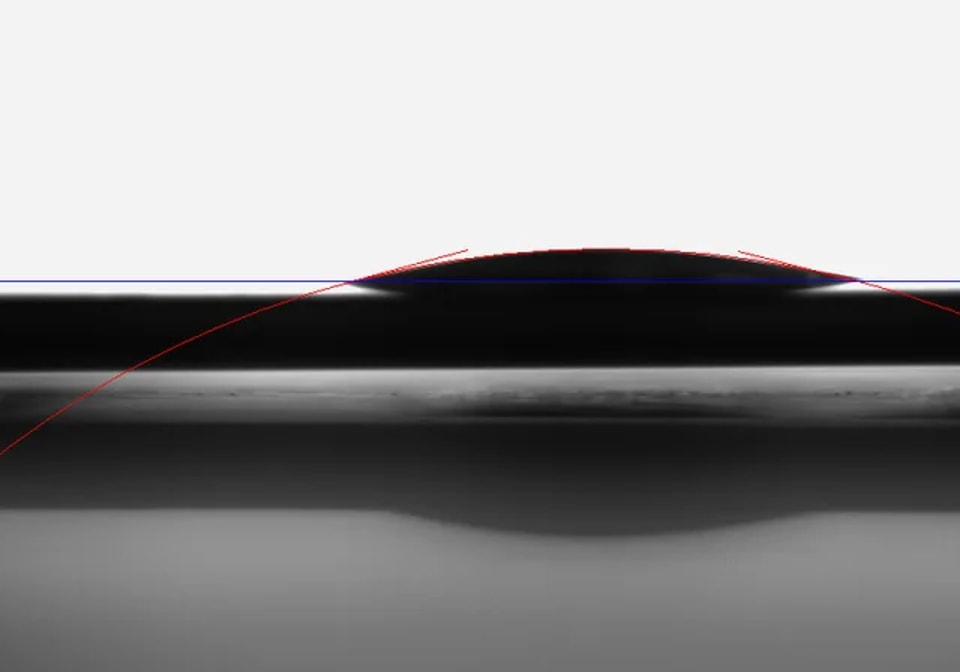
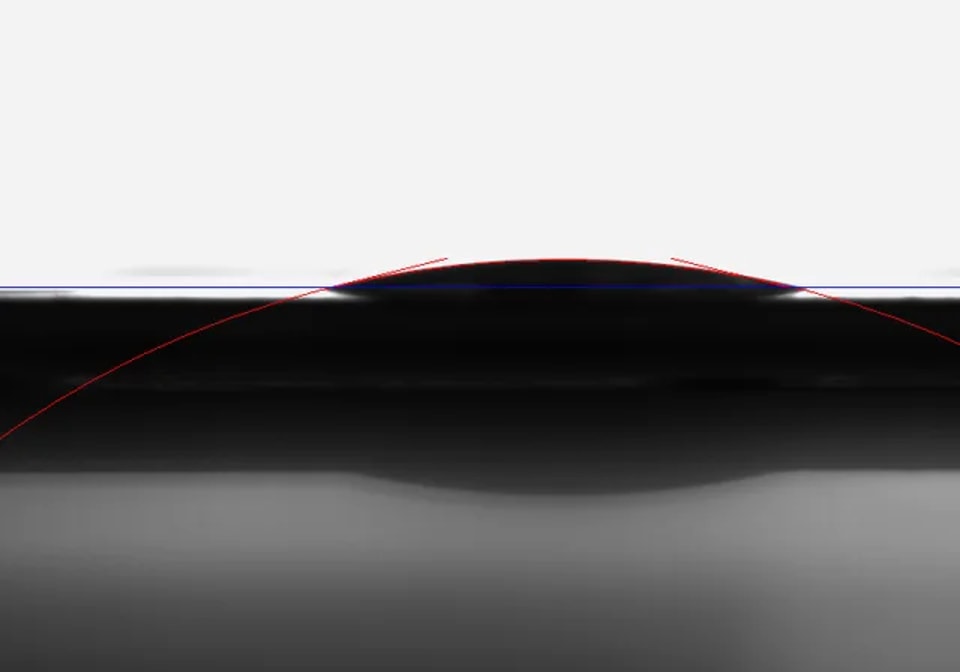
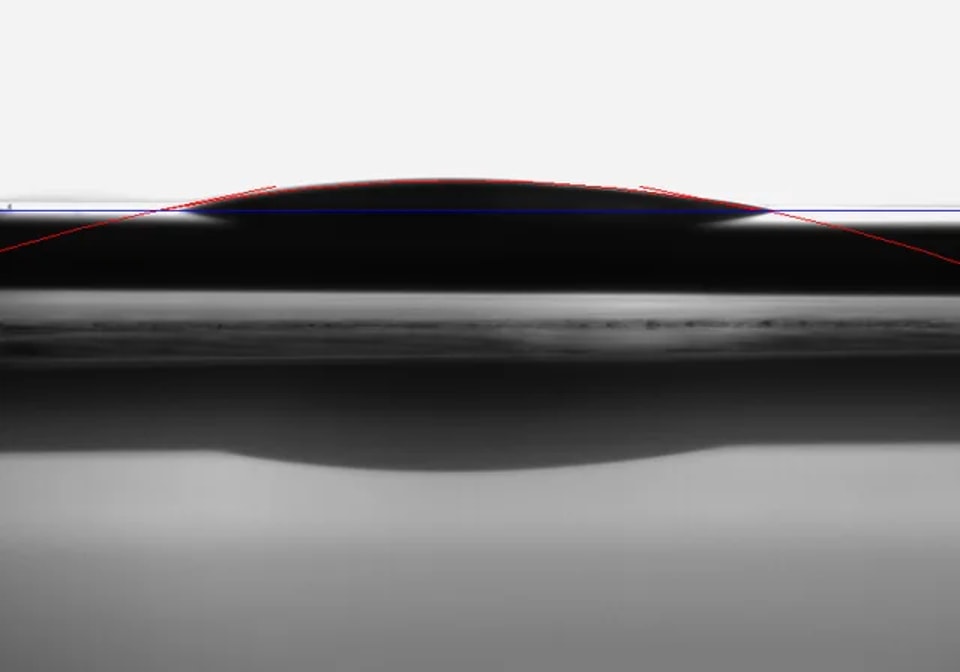
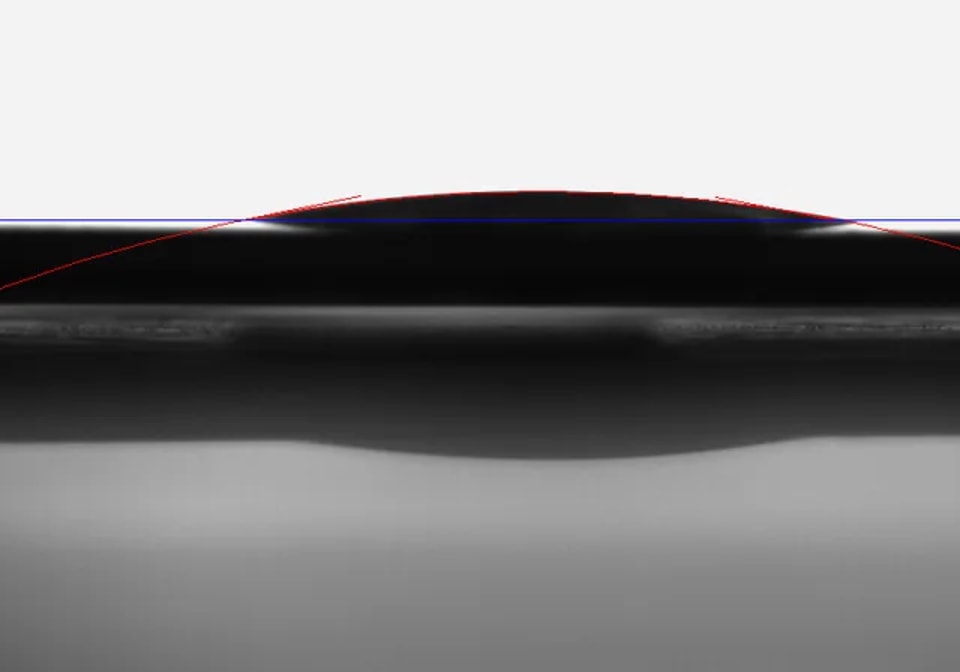
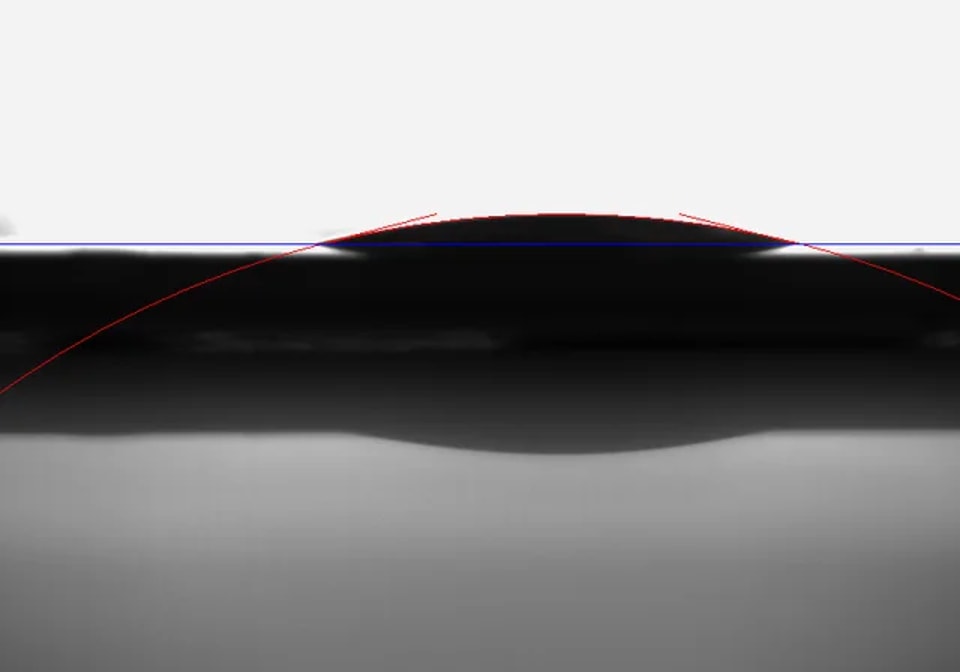
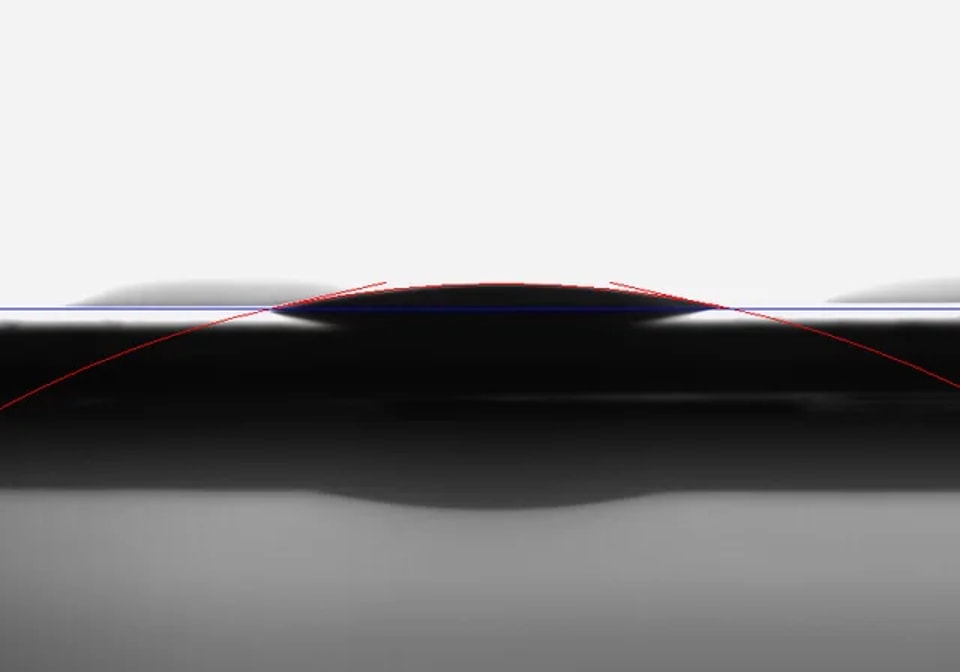
Mean 13.4°Range 3.84°Criterion ≤ 20° — all six points pass
How the data was taken. Tracking period: six weeks after production start (W1–W6). Pull force: 30 points per batch on a wire bond pull tester, mean value. Weak-bond rate: 100% inspection on the line, weak bonds ÷ total input. Contact angle: six points on TO-247 product, deionized water, AW-1 contact angle meter. CPK: 30 subgroups of 5, on the key uniformity dimension.
Before / after values are this line’s baseline before introduction and its measured level after. Droplet images are the meter’s original captures, cropped; the red arc is the fitted droplet profile.
Case 02Lead frames · AW-ZP04B
In-line cleaning of lead frames, docked to an automated line.
A semiconductor packaging company in East China cleans lead frames in line, between magazine loading and unloading, without adding waiting time to the line.
- Customer
- Discrete device and memory packaging. Name withheld.
- Region
- East and Southwest China, customer plants
- Period
- 2024–2026
- Scale
- Several in-line systems, linked to automated packaging lines
- System
- AW-ZP04B with automatic width change
The brief
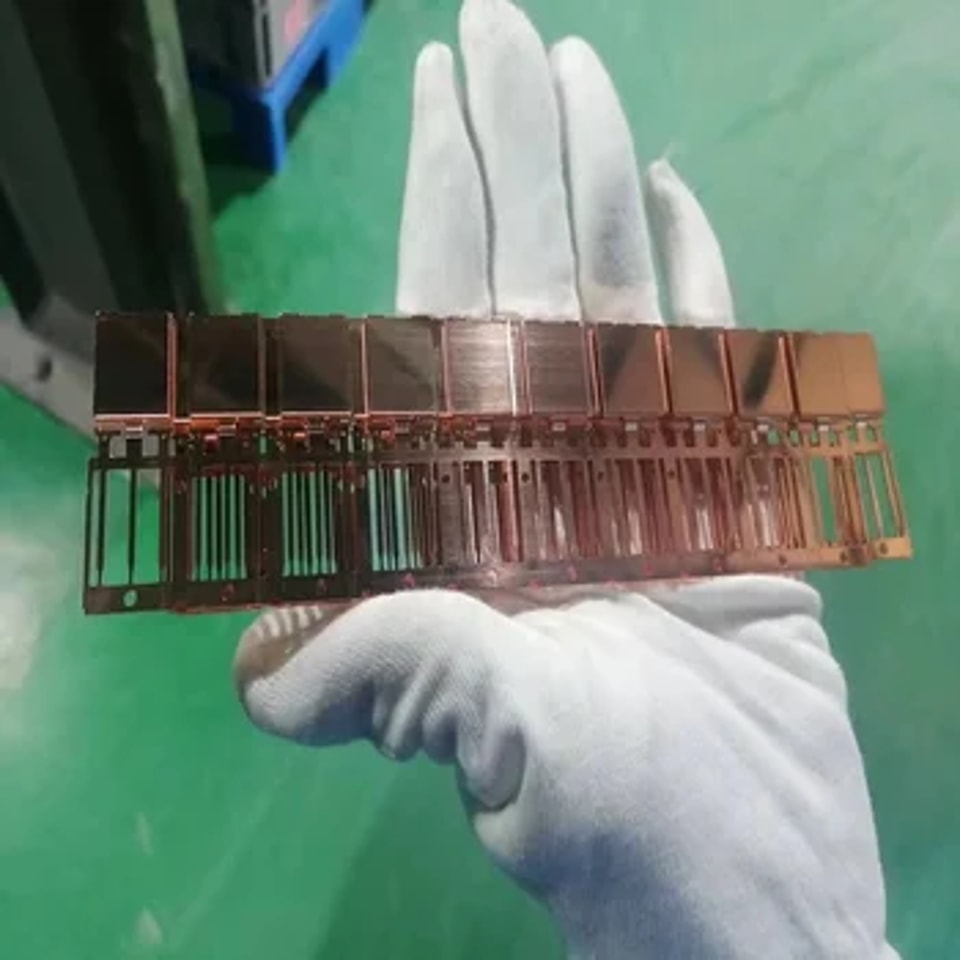
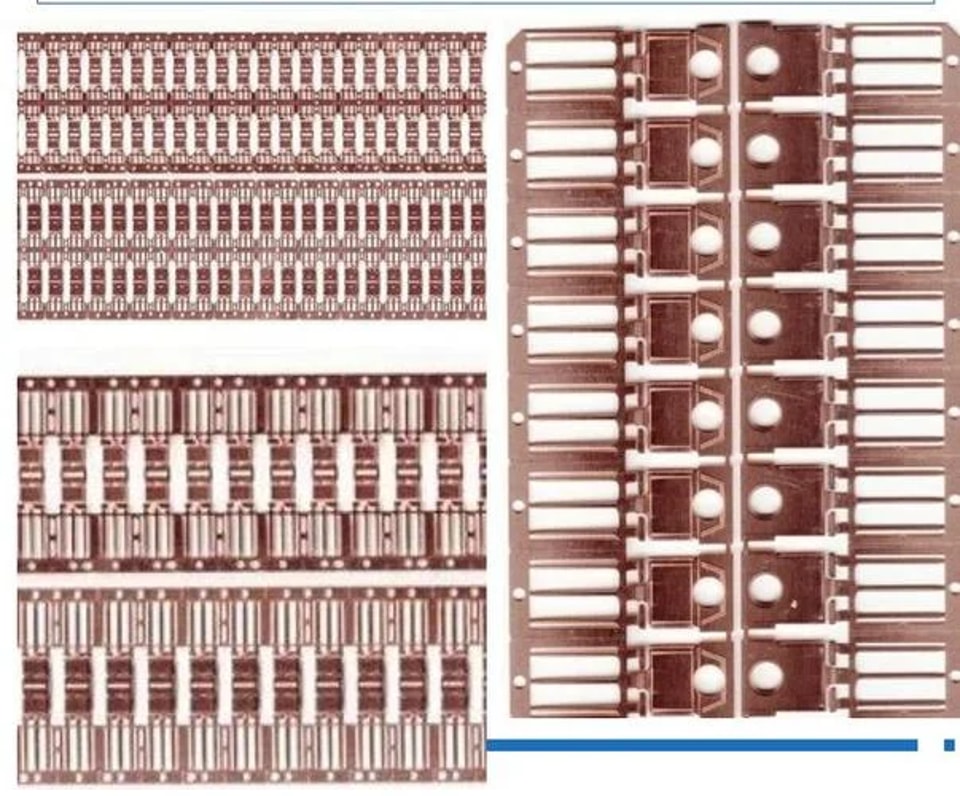
Remove stamping oil, oxide and fine particles from the frames, to improve adhesion in die attach, wire bonding and molding — without the damage that batch cleaning caused. Fully automatic: magazine in, clean, magazine out.
Requirements: dock to the existing rails, match the line takt, verifiable uniformity, safety interlocks and alarms.
What made it hard
- Thin frames deform easily — transfer and clamping need dedicated carriers.
- Heavy stamping-oil residue — power and gas ratio had to be matched to it.
- Little space on the line — a compact layout that meets the up- and downstream rail height.
- No stopping the line: installation and commissioning inside a planned shutdown window.
What we delivered
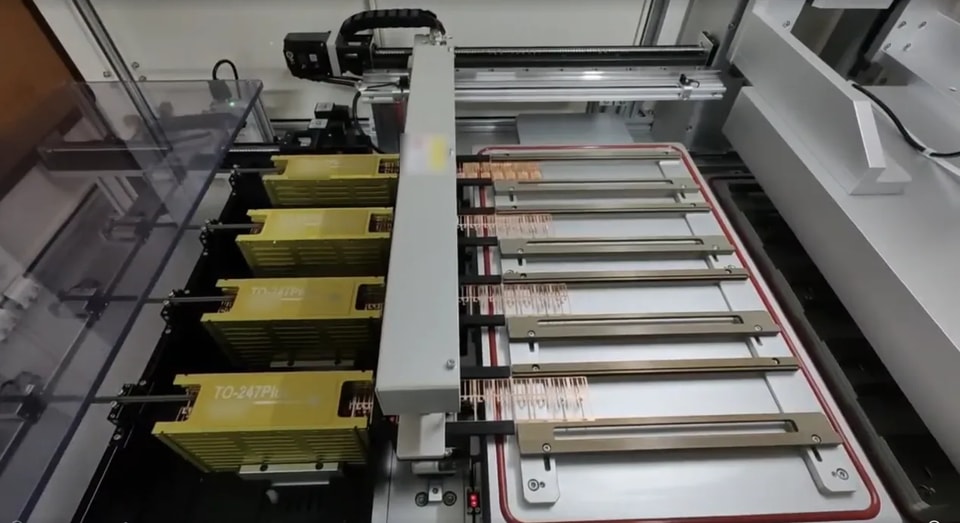
AW-ZP04B in-line RF plasma cleaner with jam prevention and detection, and automatic width change for 3–5 strip types. Four-lane chamber with bottom exchange transfer: cleaning, loading and unloading run at the same time to shorten the cycle. A pusher takes strips from the magazine automatically.
- Requirements
- Line survey
- Integration test at Awing
- Installation in shutdown window
- Commissioning
- Process validation
- Training
- Ramp-up support
Results
- Contact angle ≤ 20° on the cleaned frames; plasma uniformity checked with indicator test paper.
- Stable running at about 400 strips per hour (4 strips per cycle, ~36 s).
- Noise ≤ 65 dB(A) while running.
- Cleaning cycle matched to the line, with no added waiting.
Case 03LED packaging · AW-ZP04B
Before die attach and wire bonding, on LED lines running around the clock.
An LED packaging company in East China cleans lead frames and substrates in line before die attach and before wire bonding, across several packaging lines.
- Customer
- LED and optoelectronic device packaging. Name withheld.
- Region
- East China
- Period
- 2022–2025
- Scale
- In-line systems across several packaging lines
- System
- AW-ZP04B in-line RF
The brief
Raise the surface activity of lead frames and substrates, to improve adhesion in dispensing, die attach and wire bonding — and reduce weak bonds and delamination. Cleaning before die attach and before wire bonding.
Requirements: high throughput, low damage, consistency that can be measured.
What made it hard
- Small parts in large batches — uniformity matters on every strip.
- Lines run 24 hours: the system has to be stable and quick to maintain.
- Frequent product changes — recipes must switch fast, without mixing lots.
What we delivered
AW-ZP04B in-line RF plasma cleaner: 13.56 MHz, 0–600 W; process gas 0–200 mL/min; about 36 s per cycle, 4 strips per cycle, about 400 strips per hour. 20 stored recipes, each bound to a product type, so lots are not mixed.
- Sample trial
- Parameters locked
- Factory acceptance
- Installation
- Training
- Production follow-up
Results
- Contact angle ≤ 20° after cleaning; uniformity CPK > 1.33.
- 24-hour continuous running, with fault alarms and interlocks.
- In-line cleaning cycle meets the line’s UPH.
Related
The process behind these lines.
How plasma fits in the packaging line, and how the result is measured — or discuss your own process with an engineer.
Have a similar part?
Describe the part and the problem. A process engineer replies with a recommended format.

Inquiry
Send us a message.
Fields marked * are required. Details about the part, the material and the process help an engineer give a useful first reply.